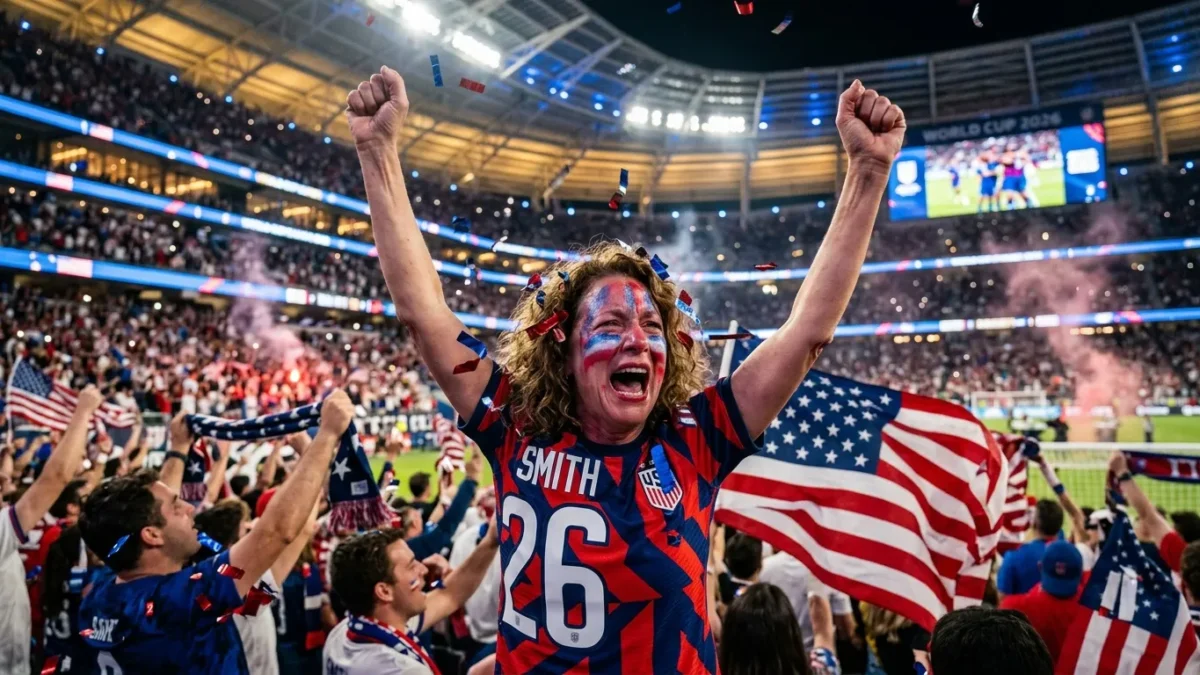
A taxi driver near Los Angeles Airport recently summed up a certain reality with striking bluntness : “There’s a World Cup happening ? Who’s playing ?” That reaction, captured just days before the 2026 FIFA World Cup kicked off on American soil, tells you everything about the uneven buzz surrounding the biggest sporting event on the planet. Not everyone in the US has caught the fever yet. But dig a little deeper, and the picture gets far more interesting.
Soccer excitement in the USA : a slow burn finally igniting
Walk through downtown Los Angeles right now and the signs are literally there. Banners near LAX promote “LA26”, electronic billboards cycle through portraits of USMNT players, and a giant mural celebrating Lionel Messi dominates a wall in the city center. Convenience stores stock World Cup merchandise. The visual infrastructure of a major tournament is unmistakably in place.
Yet for anyone not already tuned into soccer, all of this remains surprisingly easy to ignore. The tournament exists in parallel to daily life for a huge chunk of the population, rather than cutting through it the way the Super Bowl or the NBA Finals do. That gap between visibility and awareness is real, and organizers freely acknowledge it.
Larry Freedman, co-chairman of the Los Angeles World Cup Host Committee, described the build-up as “a slow build leading to a frothy frenzy.” His explanation is practical : in a city as saturated with sports, entertainment and events as LA, fans simply weren’t thinking three years ahead. They were thinking about tomorrow. Now that tomorrow has arrived, he says, “people are getting very, very excited.”
LA’s extraordinary demographic diversity is also a genuine asset here. Dozens of nations represented in this tournament have large diaspora communities across the city, meaning the fanbase for this World Cup is far broader than just American soccer supporters. Freedman pointed to that diversity directly as a driver of local enthusiasm.
| Profile | Level of excitement | Key detail |
|---|---|---|
| Casual American fans (e.g. Isaiah, Husna) | Moderate but growing | First-time World Cup viewers, motivated by local hosting |
| Younger soccer fans (e.g. Mahon) | High | Watch parties organized, strong national pride |
| General public (e.g. taxi driver) | Low to none | Unaware the tournament was starting |
What American fans actually think about the World Cup 2026
BBC Sport spoke to several Americans in Santa Monica who captured the mood well. Isaiah and Husna, both from Sacramento County, were candid : neither had closely followed soccer before, and both admitted they didn’t know who the USA was facing in their opening group game. But they were genuinely looking forward to the experience.
Isaiah put it plainly : “I’ve never actually watched the World Cup but I will watch it this year. It will be something different.” Husna’s take was equally revealing : many people she knows simply weren’t aware the World Cup existed as a concept, but with it landing in LA, “a big popular place,” they would now pay attention. The host city effect is real. Proximity creates curiosity, even without pre-existing fandom.
The younger generation stands out most sharply. Americans in their twenties who were born after the 1994 US World Cup, held 32 years ago, have no personal memory of the tournament on home soil. For them, this is genuinely unprecedented. Mahon, another fan BBC Sport spoke to, described watch parties already organized with friends, including people who don’t normally follow soccer at all.
His observation on the sport’s place in American culture was blunt and worth taking seriously :
- Soccer has, in his view, already surpassed baseball in popularity among younger Americans.
- He doesn’t expect it to rival American football or basketball anytime soon.
- But he’s confident the tournament will pull in casual viewers who wouldn’t otherwise care.
That last point matters. The 2026 edition features 48 teams for the first time, up from 32 in previous editions, meaning more nations, more games, and more potential entry points for audiences who need a rooting interest to engage. For a diverse city like Los Angeles, that expanded field is a direct advantage.
Beyond the hype : what this World Cup could genuinely change for American soccer
The real question isn’t whether Americans are excited right now. It’s whether this tournament leaves something lasting behind. The 1994 World Cup directly led to the creation of Major League Soccer in 1996, a league that now operates 30 clubs across the US and Canada. The infrastructure built around that tournament seeded a generation of fans.
The stakes in 2026 are arguably higher. The US soccer federation is under pressure to show that hosting again, combined with a far more mature domestic league and a much stronger national team pipeline, can push American soccer into a new tier of cultural relevance. The casual fans who show up for a watch party in LA because their city happens to be hosting could become the core supporters of the next decade.
One actionable takeaway if you’re in Los Angeles right now : don’t wait to feel the atmosphere passively. The fan zones, the street energy around match days, and the sheer international crowd that fills the city during group stage games are genuinely worth experiencing, even if you’ve never cared about soccer before. That’s exactly how Husna, Isaiah and millions like them will cross the line from curious bystander to committed fan. The tournament doesn’t need everyone to be a convert on day one, it just needs to make the first game impossible to ignore.
