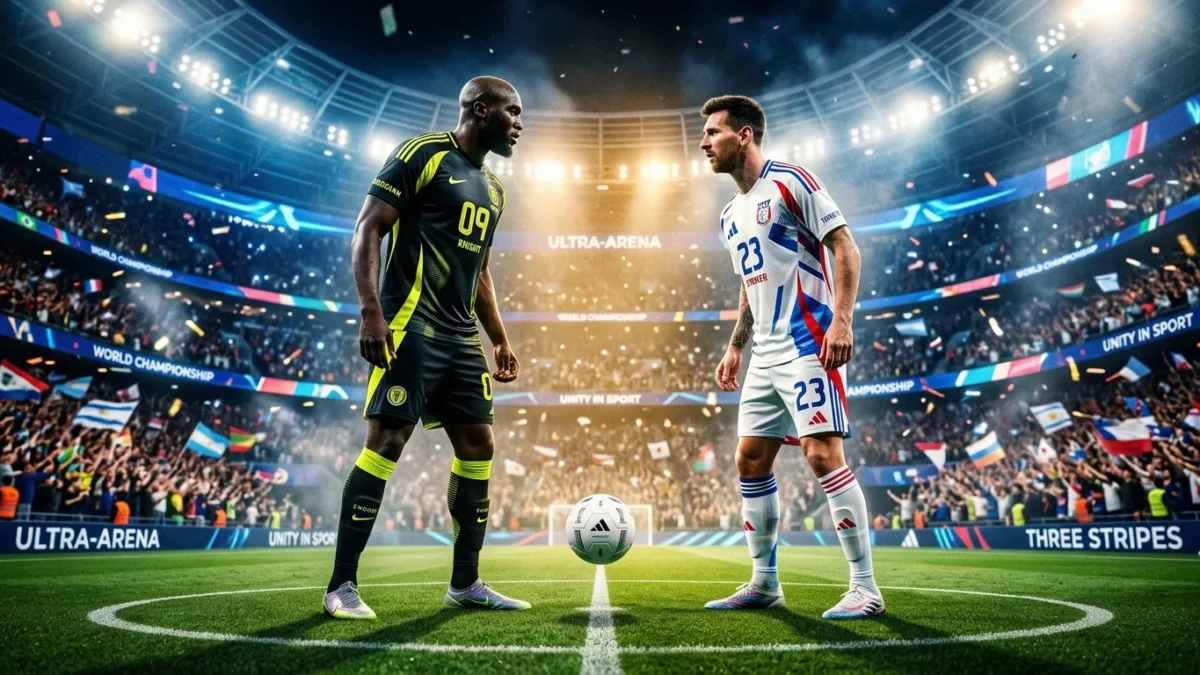
Seventy-six million views versus seven million. That single stat tells you almost everything about where the Nike versus Adidas brand battle stands at the 2026 World Cup, at least on YouTube. But raw numbers rarely capture the full picture, and this rivalry runs far deeper than a click count.
Hollywood budgets, A-list rosters : the scale of the 2026 ad war
Adidas reportedly spent £50 million producing its World Cup campaign, Backyard Legends, a figure that sounds extraordinary until you watch the thing. Zinedine Zidane, David Beckham (in AI form, no less), Alessandro Del Piero, Lionel Messi alongside musician Bad Bunny, Lamine Yamal and Jude Bellingham all share screen time on a concrete football pitch. It looks nothing like a traditional sports ad. It looks like a theatrical release that got lost on YouTube.
Nike’s Rip the Script counter-punch is equally loaded. Kylian Mbappe, Erling Haaland, Cristiano Ronaldo, LeBron James, Didier Drogba and Zlatan Ibrahimovic all feature. Neither brand will publicly confirm exact production spend, but both admitted costs run into tens of millions when pushed. The difference is that Nike’s campaign has genuinely gone viral, while Adidas is still fighting for eyeballs.
Camilo Andrade, Nike’s vice-president and general manager of Global Football, framed it this way : “What has changed is the speed and shape of culture. Stories travel faster, fragment faster, and get reinterpreted faster. The old model of one polished film doing all the work is no longer enough.” He described Rip the Script as a football universe built to live both digitally and in real life, designed to be remixed and reinterpreted by fans, players and creators alike. When a campaign achieves that, it stops being advertising and starts becoming part of football culture itself. That is a meaningful distinction.
Loyalty, legacy and long-term athlete partnerships
The real battleground, beyond any single campaign, is the roster of athletes each brand controls. These relationships are built over decades, and the contrast between the two camps is striking.
| Athlete | Brand | Partnership detail |
|---|---|---|
| Lionel Messi | Adidas | 20-year partnership |
| Cristiano Ronaldo | Nike | Signed in 2003 |
| Kylian Mbappe | Nike | Signed aged just eight |
| Lamine Yamal | Adidas | One of the brand’s newest stars |
| Vinicius Junior | Nike | Wearing Nike boots since age 13 |
| Raphinha | Adidas | Sponsored since 2024 |
Messi’s two-decade relationship with Adidas is arguably the most iconic endorsement deal in football history. Ronaldo signing with Nike back in 2003, a teenager at Manchester United, proved equally transformative for the American brand. These are not transactional arrangements. They are identity-defining alliances built on trust and mutual growth over years.
The younger generation reflects the same dynamic. Mbappe was eight years old when Nike locked him in. That kind of early investment signals long-term confidence in a player’s trajectory, and it has paid off spectacularly. Yamal, meanwhile, gives Adidas a generational talent to build around for the next fifteen years. Both brands understand the value of catching future superstars early.
At international level, the split is visible on the pitch itself. Here is how England’s squad divides at the 2026 tournament :
- Eight England players wear Nike boots, including Marcus Rashford
- Seven England players wear Adidas boots, including Declan Rice
- Virgil van Dijk, the Netherlands and Liverpool centre-back, is one of Nike’s flagship stars
- Bellingham and Yamal front Adidas’ next-generation narrative
That near-even split in a single national squad reflects the broader equilibrium. Neither brand has a stranglehold on talent. The competition is genuine, intense and deeply personal for both sides.
What the view count gap actually reveals about modern football marketing
Frankly, the 76 million versus 7 million YouTube gap between Nike and Adidas should concern the German brand’s marketing team. It is not just about bragging rights. Digital reach at this scale shapes boot sales, kit demand and youth aspiration for the months following a tournament. The World Cup window is short. Missing it costs real money.
But here is a more nuanced read : view count alone does not equal cultural impact. Adidas has historically built brand equity through slower-burn storytelling and product prestige. The Messi-Adidas visual language, refined over two decades, carries weight that no single campaign statistic captures. The real question is whether Backyard Legends will convert awareness into purchase intent at retail level once the tournament concludes.
Nike’s strategic framing is smarter for the current moment. Andrade explicitly rejected the idea of measuring success purely by film views, pointing instead to fan creativity and cultural integration as the real metrics. When players, creators and supporters start remixing your content, you have built something that outlasts any ad campaign. That is genuinely difficult to manufacture, and Nike appears to have managed it this cycle.
The lesson for both brands extends beyond football : the brands that win long-term sporting rivalries are those that make athletes feel like genuine partners, not hired faces. Both Nike and Adidas understand this principle. The difference at World Cup 2026 is in the execution, and right now, one brand is executing at a significantly higher level than the other.
