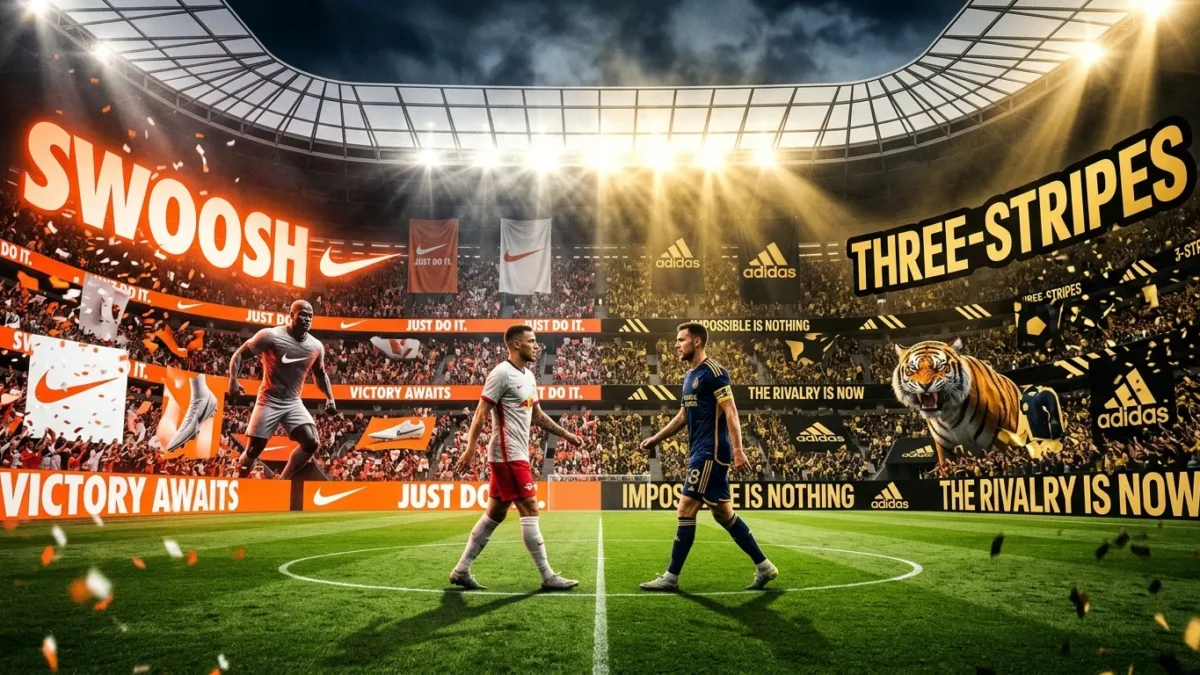
Forget modest sponsorship patches and logo placement. At the 2026 World Cup, Nike and Adidas are waging a full-scale marketing war, pouring tens of millions into campaigns that look more like streaming blockbusters than football adverts. The numbers alone tell part of the story : Nike’s Rip the Script campaign has already racked up 76 million YouTube views, while Adidas’ Backyard Legends sits at around seven million. That’s not a gap, that’s a chasm. But raw views don’t capture the full picture of what both brands are doing, or why it matters beyond the pitch.
Two campaigns, two visions, one tournament to own
Nike’s Rip the Script is a sprawling football universe built around some of the sport’s most recognisable faces. Kylian Mbappé, Erling Haaland, Cristiano Ronaldo and LeBron James all feature, each chosen to signal that Nike’s reach extends beyond football into global pop culture. Camilo Andrade, Nike’s Vice-President and General Manager of Global Football, put it bluntly : “The old model of one polished film doing all the work is no longer enough.” The campaign is designed to be remixed, reinterpreted and shared by fans and creators. Nike isn’t selling a product here, it’s selling a cultural movement.
Adidas came back with Backyard Legends, and the talent roster is equally staggering. Lamine Yamal, Jude Bellingham, Lionel Messi and Zinedine Zidane share screen time, with an AI-generated version of David Beckham making a cameo that sparked its own wave of online debate. The visual tone leans into nostalgia, concrete pitches and street football energy, which makes sense given Adidas has always positioned itself as closer to football’s roots than its American rival. Reports put the German brand’s production spend at £50 million, a figure neither company has officially confirmed.
The athlete rosters that define the rivalry
The real battleground isn’t YouTube, it’s the boots worn by the world’s best players. Both brands have spent years, and fortunes, locking down long-term athlete partnerships that reach peak visibility during a World Cup. Here’s a quick breakdown of where some of football’s biggest names stand heading into the tournament :
| Player | Brand | Partnership detail |
|---|---|---|
| Lionel Messi | Adidas | 20-year partnership |
| Cristiano Ronaldo | Nike | Signed in 2003 |
| Kylian Mbappé | Nike | Signed at age eight |
| Vinicius Junior | Nike | Nike boots since age 13 |
| Lamine Yamal | Adidas | One of the brand’s newest stars |
| Jude Bellingham | Adidas | Wears Adidas boots in training |
| Raphinha | Adidas | Sponsored since 2024 |
| Virgil van Dijk | Nike | One of Nike’s top defenders |
These partnerships start young and run deep. Mbappé was eight years old when Nike signed him, Vinicius Junior pulled on Nike boots at 13. These aren’t endorsements, they’re career-long brand identities. When Ronaldo scores at a World Cup wearing Nike or Messi lifts a trophy in Adidas kit, the commercial value is immeasurable. Both companies understand this, which is why the investment never stops, even between tournaments.
On the England squad alone, the split is visible and deliberate. Eight England players wear Nike boots, seven wear Adidas. That near-even divide across one national squad shows just how contested the top level of the sport is. Neither brand dominates, which is precisely why both keep spending.
Why the marketing spend keeps climbing, and what it actually buys
Spending £50 million on a single campaign sounds outrageous until you consider what’s at stake. The 2026 World Cup, hosted across the United States, Canada and Mexico, is projected to be the most-watched sporting event in history, with FIFA targeting an audience of five billion viewers across all platforms. For Nike and Adidas, this is the single biggest marketing moment of a four-year cycle. Every percentage point of brand recall gained during a World Cup translates into boot sales, kit licensing and cultural relevance that compounds for years.
The strategic difference between the two campaigns is worth unpacking. Consider what each brand is actually betting on :
- Nike’s Rip the Script prioritises digital virality and creator participation, designed to keep generating content after the initial launch.
- Adidas’ Backyard Legends leans into heritage and emotion, using legends like Zidane alongside current stars to bridge generations of fans.
- Nike targets cultural crossover, pulling in LeBron James to signal relevance beyond football.
- Adidas bets on the sport’s soul, with street football aesthetics that resonate globally, particularly in Europe and South America.
Frankly, the 76 million versus seven million view gap is too big to dismiss as irrelevant. Nike’s approach to building a participatory campaign, one that fans can remix and creators can riff on, reflects a sharper understanding of how content actually travels in 2026. Adidas made a beautiful film. Nike built a platform. Those are fundamentally different ambitions, and the numbers suggest one strategy is connecting more effectively right now.
The smartest move for any football fan watching this unfold is to look past the celebrity cameos and ask which brand is actually shaping football culture at grassroots level. Boot sponsorships win tournaments in terms of visibility, but the brand that funds academies, women’s football and local leagues builds loyalty that no single advert can buy. That’s the battle neither company is advertising, and arguably the one that matters most.
