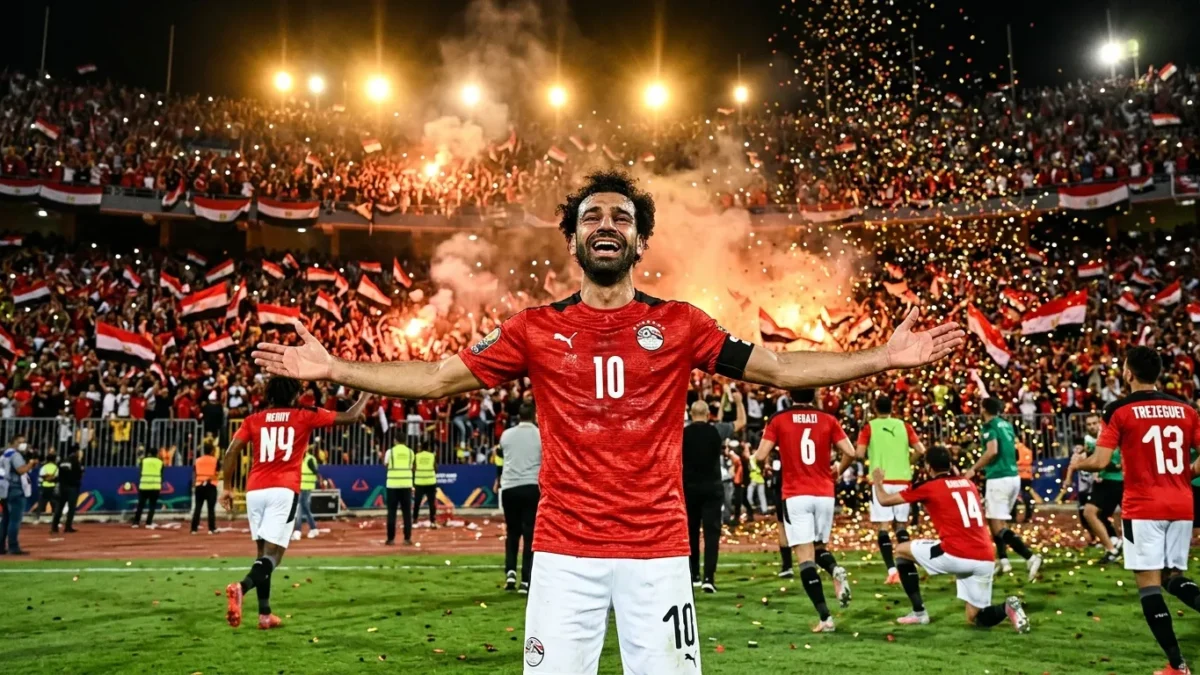
92 years. That is how long Egypt waited for a victory at the FIFA World Cup. On June 22, 2026, Mohamed Salah ended that agonizing drought with a goal against New Zealand that sent an entire nation into delirium. Not just a win. A historic one. The kind that rewrites the story of a footballing country and cements a player’s legacy forever.
A moment 92 years in the making
Egypt’s relationship with the World Cup has always been complicated. The country qualified for its first edition back in 1934, a pioneer on the African continent, yet decades of near-misses and painful absences followed. This 2026 tournament, co-hosted by the United States, Canada, and Mexico, finally gave the Pharaohs the stage they craved. And Salah, 34 years old, delivered exactly when the pressure was at its peak.
His goal against New Zealand was his 68th in 118 appearances for the senior national team, leaving him just one goal behind the all-time Egyptian scoring record held by his own manager. The timing, the weight of it, the symbolism : few goals in recent World Cup history carry as much meaning for a single nation.
What made this performance even more striking was Salah’s total involvement in the game. He registered five shots himself and created five more chances for teammates, making him statistically the most active player in terms of shot contribution during any match of this World Cup so far. That is not a supporting role. That is a one-man attacking operation.
| Stat category | Salah vs New Zealand |
|---|---|
| Goals scored | 1 |
| Personal shots | 5 |
| Chances created | 5 |
| Career Egypt goals | 68 |
| International caps | 118 |
Ange Postecoglou, the former Tottenham manager who was working as a pundit for ITV during the match, put it clearly : “If there was any doubt about Mo’s impact on this team, you can still see it. They had to deal with adversity and their big player stood up.” Former Jamaica winger Jobi McAnuff echoed that view, simply stating : “Just when he was needed, Mo Salah stood up for his country.” Two different voices, one shared reading of the moment.
The weight Salah has carried for 14 years
Salah has worn the Egypt shirt at senior level since 2011. Fourteen years of service, fourteen years of expectation. The pressure attached to him is unlike anything most footballers experience at international level. When he was injured in Liverpool’s Champions League final defeat against Real Madrid in May 2018, speculation immediately erupted about whether he would miss the Russia World Cup just weeks later. Egypt’s Minister of Health personally called the national team’s doctor, Dr Mohamed Aboud, to check on his condition. That detail alone tells you everything about how a country perceives one man.
He did travel to Russia, but Egypt crashed out in the group stage. The trophy cabinet for his country remains empty, despite him winning the Premier League with Liverpool in both the 2019-20 and 2024-25 seasons. At club level, the silverware has come. For Egypt, it has been a different story entirely.
- Africa Cup of Nations final defeat vs Cameroon in 2017
- Africa Cup of Nations final defeat vs Senegal in the 2021 edition (played in early 2022)
- Group stage exit at the 2018 World Cup in Russia
The generation before him, meanwhile, won three consecutive Africa Cup of Nations titles between 2006 and 2010. That contrast has hung over Salah’s international career like a shadow. Brilliant individually, yet somehow always denied at the final hurdle with his country.
This win against New Zealand does not erase all of that. But it rewrites one chapter. Egypt have now secured their first World Cup victory in 92 years, and Salah’s fingerprints are all over it. At Liverpool, he is a superstar. For Egypt, he operates on a completely different emotional plane, carrying a weight that no Premier League title run can replicate.
What this breakthrough could change for Egyptian football
Winning a World Cup match matters beyond the three points. It shifts the psychological reality of an entire squad and, arguably, of an entire football culture. Egypt now know they can compete at this level. That belief, as Postecoglou noted on ITV, is not abstract. It is tangible, match-by-match fuel.
Salah is also closing in on the all-time Egyptian goal-scoring record. One more goal separates him from surpassing manager Hassan’s total. Reaching that milestone at a World Cup, on football’s biggest stage, would be a fitting way for the most decorated Egyptian player of his generation to claim the record outright.
The deeper question, frankly, is what happens to this team’s ambition once Salah eventually steps back. Egypt’s system has been built so heavily around his movement, his shooting, his ability to draw defenders and create space, that the transition planning deserves serious attention now, while there is still time to develop the next generation with him still on the pitch. The World Cup 2026 offers exactly that opportunity : real competitive minutes for younger players alongside their greatest ever talent, learning in conditions no training camp can replicate.
