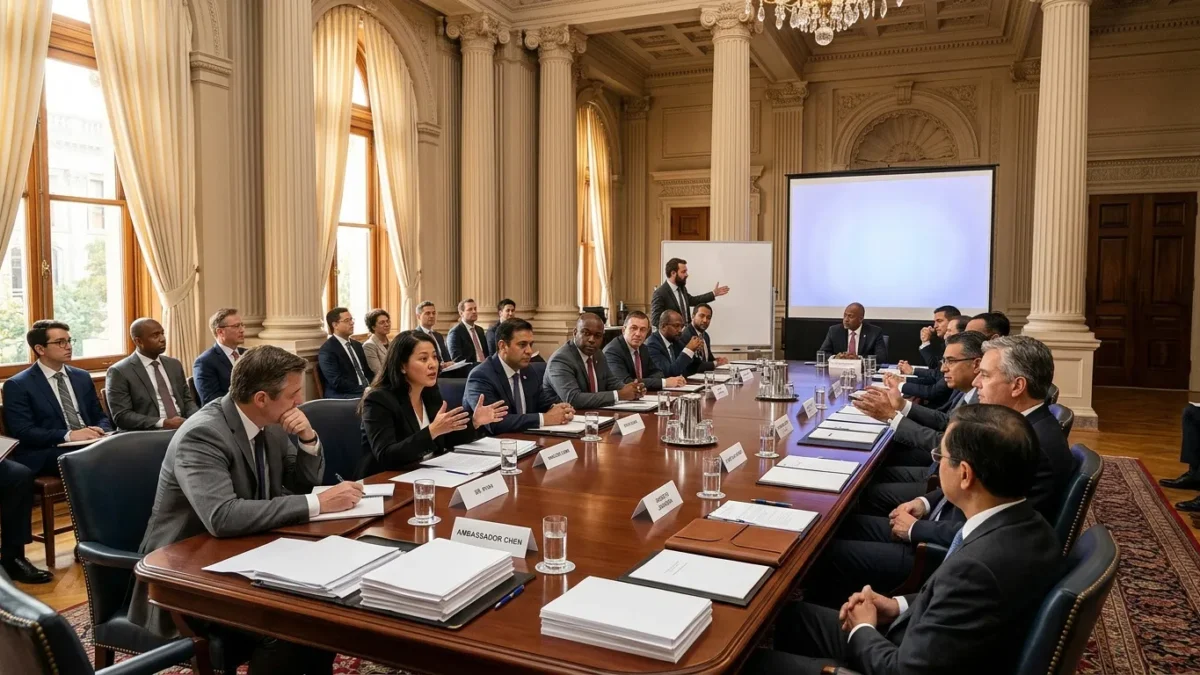
At least 13 major college football coaches are already set to earn $10 million or more next season. That single figure tells you everything about why the federal government is now stepping in. The White House committee on college sports reform has been circulating a preliminary draft of proposals that could reshape American college athletics more fundamentally than anything attempted before.
President Donald Trump formed five committees back in March 2026, following a high-profile “Saving College Sports” roundtable in Washington D.C. He appointed New York Yankees president Randy Levine and Florida Governor Ron DeSantis as vice chairs of the broader effort. The roster also includes former Alabama head coach Nick Saban, NBA commissioner Adam Silver, former Secretary of State Condoleezza Rice, and power conference commissioners. These aren’t token names — this committee means business.
A three-phase blueprint for restructuring college athletics
The draft circulated this week within the College Sports Reform Committee lays out a structured, three-phase approach built around stabilization, media rights reform, and permanent governance. The document itself is marked “discussion purposes only,” meaning nothing is final — but the direction is unmistakable.
Phase 1 hits hardest. The committee proposes salary caps for coaches and administrators, which would be the most direct federal intervention into athletic department spending ever floated at this level. The goal is clear : rising costs are forcing programs to eliminate non-revenue sports and shrink staff. Wrestling, swimming, gymnastics — these are the programs disappearing. Capping salaries is one way to stop the bleeding.
Also in Phase 1 : a ban on NIL-based salary cap circumvention. Booster collectives and athletic departments have been rerouting multimedia rights revenues and apparel deals to effectively supplement the $20.5 million schools are permitted to share with athletes under the House v. NCAA settlement. The committee wants that loophole closed.
Here’s a quick breakdown of the three phases and their core objectives :
- Phase 1 – Stabilization : Coach/admin salary caps, NIL circumvention ban, transfer portal reform using a college version of the NBA’s Bird Rule, CFP revenue redistribution, and a separate playoff for Group of Six conferences.
- Phase 2 – Media rights reform : A pooling model where 75 or more schools combining their media rights at contract expiration would receive antitrust protection. This builds on ideas floated by Texas Tech booster Cody Campbell and publicly backed by American Conference commissioner Tim Pernetti.
- Phase 3 – Permanent governance : A 15-member oversight board including players, power conference commissioners, Notre Dame’s athletic director, Division II/III representatives, and an independent attorney.
The transfer portal reform deserves a closer look. The Bird Rule concept — borrowed directly from the NBA — would let schools offer additional financial incentives to players who stay for consecutive seasons. It’s a smart mechanism : rather than punishing transfers, it rewards loyalty. Whether athletes will buy in depends entirely on how competitive those retention packages become.
Congressional action and the antitrust question at the core of this reform
Every single proposal in this draft is contingent on one thing : Congress passing antitrust protection legislation for the NCAA. Without that shield, none of the structural changes can survive legal challenge. The committee is pushing hard for this legislation to pass before the congressional summer recess — even if it contradicts specific recommendations in the memo itself, which is a remarkable admission of urgency.
The SCORE Act is expected to hit the House floor the week of May 18, 2026. But leaders privately acknowledge the bill is at least six votes short in the Senate. That gap matters enormously — it could delay or derail the entire reform timeline.
| Legislative element | Current status | Key obstacle |
|---|---|---|
| SCORE Act (House floor) | Scheduled week of May 18, 2026 | ~6 votes short in Senate |
| Antitrust exemption for NCAA | Required for all reforms | No legislation passed yet |
| Sports Broadcasting Act amendment | Proposed for Phase 2 | Conference media deals extend to 2036 |
The committee also proposes establishing a College Sports Reform Task Force inside the existing NCAA structure, operating for two years with authority to override state laws. Any rules it sets would carry permanent antitrust protection — meaning they’d remain in force even after the body dissolves, unless overturned by Congress or a successor body. That’s a significant amount of institutional power concentrated in a temporary committee.
What this means for the future of college sports governance
The proposed 15-member permanent board in Phase 3 signals something important : the era of the NCAA governing college sports largely unchecked is ending. Notre Dame’s athletic director would hold a dedicated seat, alongside player representatives, conference commissioners, and independent counsel. That’s a meaningful shift — athletes gaining a formal voice in the room where decisions are made.
The committee also floated appointing commissioners to oversee individual sports in Phase 3. Think of it as specialized regulators for football, basketball, or Olympic sports — each with their own expertise and accountability structure.
If you want to understand what’s truly at stake for athletes specifically, the proposed changes to NCAA eligibility rules paint an equally disruptive picture of where this system is heading.
Frankly, the most important variable right now isn’t the quality of the proposals — many of them are genuinely thoughtful. It’s whether Congress moves fast enough and with enough votes to make any of it legally viable. Without that legislative foundation, this draft stays exactly that : a draft. Watch the Senate vote count on the SCORE Act. That number will tell you more about the future of college sports than any committee memo.
